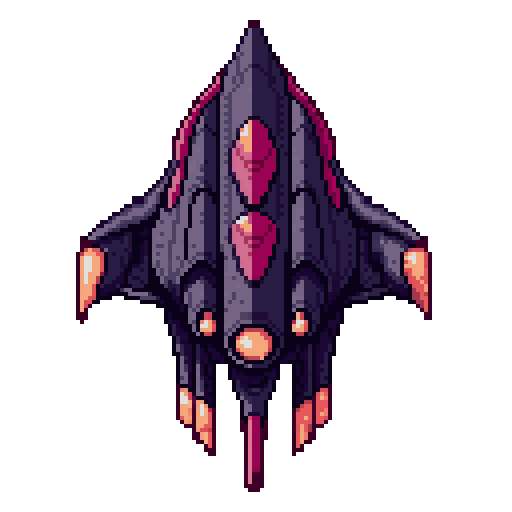
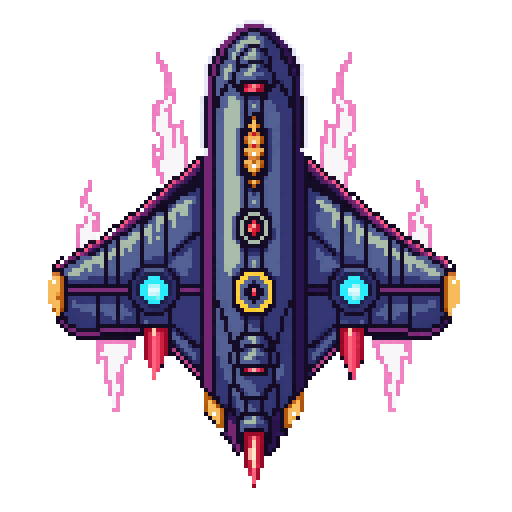
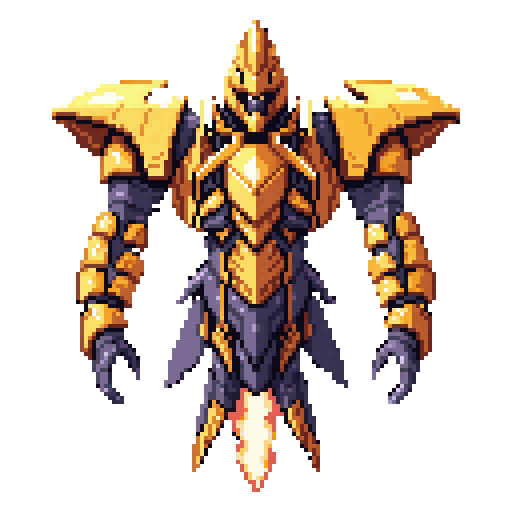
The day it began was no different from a hundred before it. I woke before the cabin's artificial dawn, checked the shields, checked the guns, drank something once called coffee. Routine. You fly, you shoot, you survive, you land. That is the life of a pilot on the frontier. No one told us that one day the frontier would look back at us.
Before I lit the engines, Elena painted another white stripe on my hull. She did it after every safe return, one stripe for every flight I came back from alive. She said that when she ran out of room, she would finally have to ground me. That morning I counted a hundred and fourteen.
I do not remember when I stopped counting them as wins and started counting them as debt. Perhaps when I understood that every one of them marks somebody who did not come back that day. The fleet does not paint stripes for those. The fleet simply stops entering them into the roster, and after two weeks the young ones in the mess stop asking.
She laughed over the headset and said what she always said: come back. I did not yet know that this word would soon become the hardest thing ever asked of me.
The first signal came as interference. Something on no chart, foreseen by no computer. A black stain in black space, yet I knew where it was, because the stars around it trembled, as if afraid to shine too close.
For the first two hours there was nothing out there but silence and dust. Then the Scouts came.
They were pitiful. Barely armoured, barely armed, barely alive. They died to a single shot, bursting apart like something that had never had any business leaving the factory. I shot down forty of them and felt nothing but boredom. It was only on the forty-first that I noticed they all flew the same way. Not in formation. Not tactically. Just identically, as though each of them were repeating the same movement, corrected by a fraction.
They were learning. Not individually, because no Scout lived long enough to learn anything. The thing that sent them was learning.
I reported it and was told this was normal swarm behaviour. In the fleet archive I found something else. An old entry, almost erased, signed by someone whose name the system no longer remembers:
RECOVERED DOCUMENT — FLEET ARCHIVE
„We have registered a gravitational anomaly in a sector that should not be there. Initial readings suggest an object. The readings are wrong. It is not an object. Objects do not react when they are looked at. It moved when we turned the sensors on it. As if it felt that we were watching. I recommend immediate withdrawal. I recommend radio silence. I recommend we never return here."
There was no withdrawal. They sent us here. They sent me.
Remember that first lesson, because it is the only one that stayed true all the way to the end: the void loses nothing by spending a thousand Scouts. Every one of them, dying, reported what had killed it. Everything I did that day was tuition. I thought I was clearing a sector. I was being surveyed.
CHAPTER 2 · WAVE 5
An Eyelid That Refuses to Open
Nothing announced the fifth wave but silence, and that silence was unlike any before it. The Scouts stopped coming. They did not die out, they simply stopped. As though someone had lifted a hand from the table, finished counting.
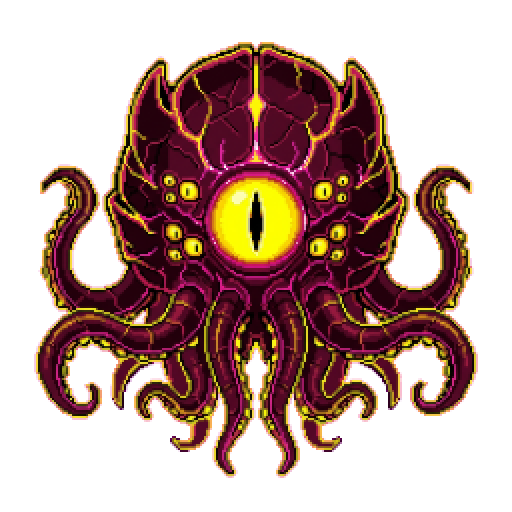
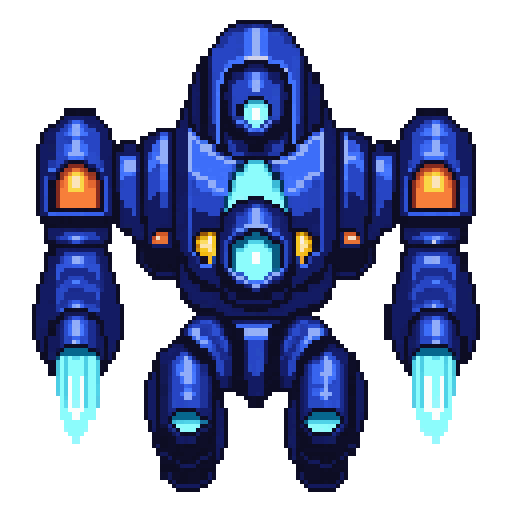
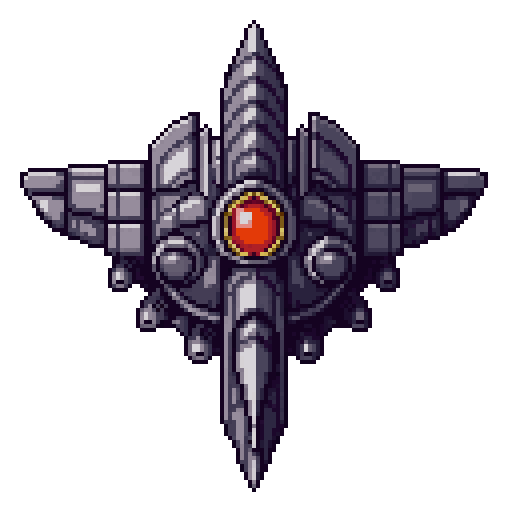
That was when the Sentinel came out of the dust.
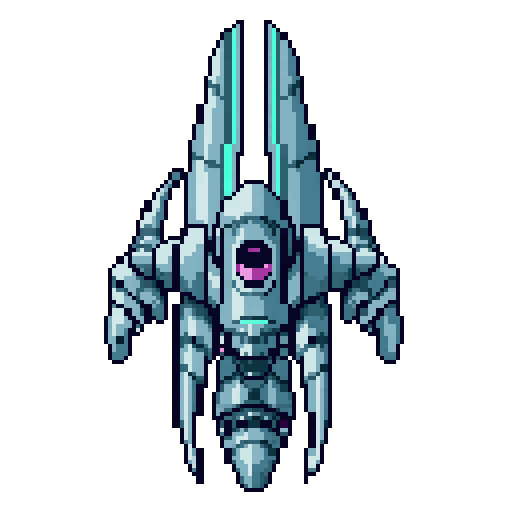
The first thing you notice is that it does not come at you. It hangs. It turns about its own core, slowly, plate after plate, and for the first half a minute you think you are dealing with a machine that has not seen you. I fired everything I had into it. The rounds died on the armour like sparks on a wet stone.
It took me four minutes to understand that the armour is not a shield. The armour is an eyelid.
The plates orbit, and only when the rotation opens can you see what lies beneath. Not a gun. Not a reactor. An eye. Vast, unmoving, and for that one second it was open it looked straight at me.
I cannot describe this properly to someone who was not there. Imagine that for a hundred and fourteen flights you have been shooting at things that did not know you existed. And then something turns and recognises you. Not as a target. As a pilot. As a specific man in a specific hull with a specific number of stripes on it.
I fired into that second and I hit. The plates closed again. The Sentinel did not so much as flinch, but something in the rhythm of the rotation changed, because now it opened less often, and its beam swept the arena wider, as though checking whether I had learned to run.
That is how I won the first fight: by waiting. Fifteen minutes of waiting for the seconds in which shooting was permitted.
When it broke, it did not explode. It came apart. The plates drifted away from one another and hung there for a moment in the same arrangement in which they had orbited, as though still protecting something that was no longer there.
FLEET ARCHIVE — PRELIMINARY CLASSIFICATION
„Object designated SENTINEL. First Fleet named it the gate. It does not kill in order to eliminate a target, but in order to stop movement deeper into the sector. The unit shows no aggression outside its radius."
„Second Squadron passed the Sentinel in cycle 44. None of the Second Squadron ever came back to say what waits behind it."
I returned to base. Elena painted the hundred and fifteenth stripe and said I looked as if I had left something out there in the dark.
She was wrong. I had not left anything. I had brought something back. Something that looks at me now when I close my eyes.
They called it a sentinel, but a sentinel guards against entry. It was not making sure nobody came in. It was making sure somebody finally did, and that it got to watch.
CHAPTER 3 · WAVE 10
The Second Came from the Wrong Direction
The fleet knew about the Twins before I flew out there, and that is the only reason I came back from that wave alive. It knew wrongly, however, and that is the reason I nearly did not.
The registry listed one ship at those coordinates. One hull, one signature, one record. The documentation was old, precise and signed off by three independent crews. All three had seen one.
I saw two.
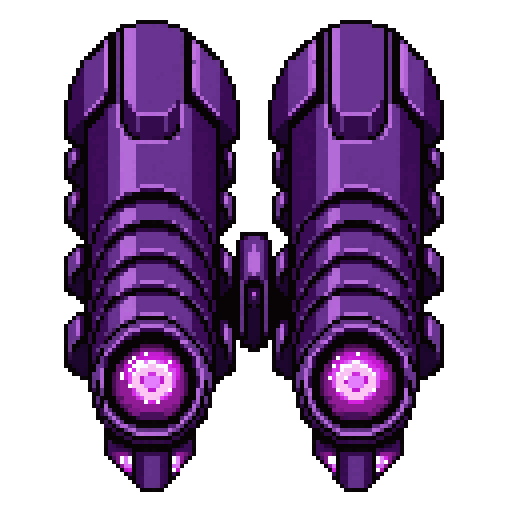
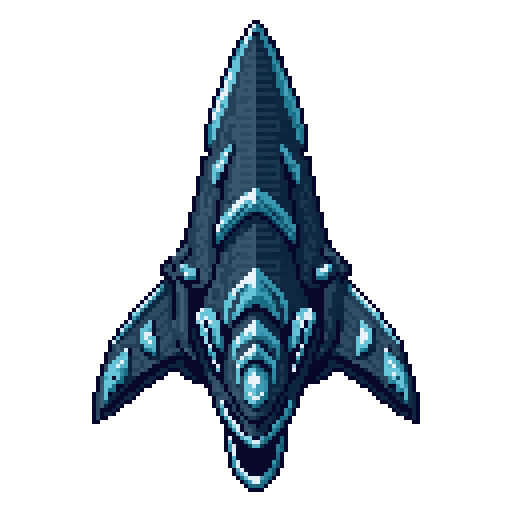
They come in from opposite edges, symmetrically, and for the first moment it looks like an ordinary pair of fighters. Then a thread lights up between them. A thin line of light that stretches across the whole arena and does not go out as they move. Anything that touches that thread stops existing. I watched it cut an asteroid in two, and the halves drifted apart with a cut so clean it looked polished.
The basic mistake, and I made it immediately, is to chase one of them. You hit the left one, the right one does not weaken. You hit the right one, the left one does not speed up. For three minutes I was convinced I was doing no damage at all.
I was not damaging one of them. I was damaging one life divided between two bodies. Everything I put into the left came out of the same pool as everything I put into the right. Two hulls, one death.
The trick with the thread is simpler than it looks, and you have to arrive at it within seconds, because there is no second chance. The thread always links them along the shortest line. If you fly along it, you are running towards where the thread is about to be. If you cut across it, you pass through a place it has just left.
Along is death. Across is life. The entire fight fits in that one sentence.
But that is not what this chapter is about.
After the fight I went back to the registry and checked the dates. The entry about one ship was forty years old. Back then there truly was one. The second was added later, in a supplement that nobody ever linked to the original, because it arrived from a completely different direction and was filed as a separate phenomenon.
SUPPLEMENT TO REGISTRY — NO CROSS-REFERENCE
„Secondary signature registered in sector VOID. Entry vector inconsistent with any known corridor. The object did not arrive from deeper in the sector, nor from outside it."
„The object bears the same proper name as the primary unit. Separate classification recommended pending clarification. No clarification was made."
I read that three times and got colder each time. Two hulls sharing one life were not a pair. They were one thing that had learned to be in two places. And if it learned that in the forty years since first contact, then for those forty years it had not been defending itself.
It had been practising.
CHAPTER 4 · WAVE 15
The Song of the Generators
The Shield is the only boss the First Fleet formally lost, and it lost it in a way they still teach cadets as an example of how not to fight.
The record of that operation runs one hour and eight minutes. For one hour and eight minutes, thirty-seven ships shelled the bastion at the centre of the formation, and for one hour and eight minutes they did it not one point of damage. Not because the armour was thick. Because they were shooting at the thing that was never the target.
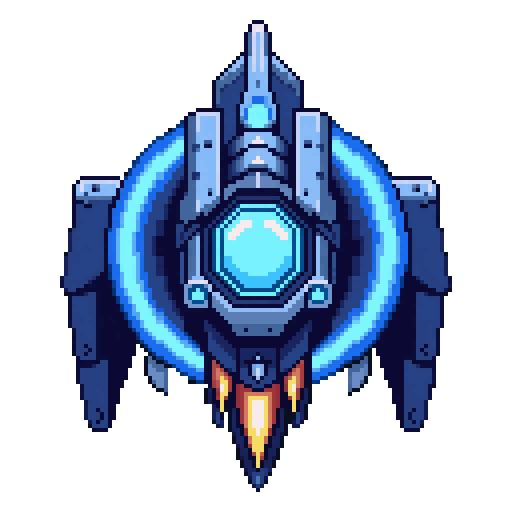
The Shield surrounds itself with generators. Six small, silent constructions that orbit it on their own paths and look like an escort. They are not an escort. They are an instrument.
Each of them hums. You cannot hear it through vacuum, but the hull's acoustic sensor picks it up as a steady vibration, and if you overlay the signals from all six you get a chord. That chord is the barrier. While it sounds, the core is untouchable in an absolute sense: not reduced, not weakened, simply outside the concept of damage.
You kill one generator, the chord loses a note, and nothing happens. You kill a second, a third, a fourth, and still nothing. The barrier does not fade by degrees. It is not a shield with a bar, it is a condition. While even one lives, the condition holds.
Only the sixth changes anything. The last note dies and for a fraction of a second nothing happens at all, a silence so complete that for the first time in twenty minutes you hear your own engines. And then the bastion, which has stood motionless the whole time, moves for the first time.
It is not rage. Rage is human. It is closer to the impatience of a machine that has just had a safety interlock removed and no longer has any reason to pretend at patience.
TRANSCRIPT — OPERATION „STONE WALL", MIN. 61:14
„...repeat, no reaction to fire. Zero. We are not just wasting ammunition, something is wrong here. Get me a read on the small ones. The six circling it."
„Command, those are not escort drones. They are doing something. They are sustaining something. Requesting permission to switch targets."
„...permission not granted."
Permission not granted. Four words, and behind them thirty-seven ships and an hour of fire poured into vacuum.
I came back from that wave with a thought I could not put down. The void did not build the Shield to be hard. It built it to be unobvious. To kill not skill, but the conviction that you know what to shoot.
And that is worse news than it sounds. Because something that designs an enemy around a human cognitive failure had to learn the human cognitive failure first.
It had forty years and thirty-seven ships in which to study it.
CHAPTER 5 · WAVE 20
What the Spawner Makes
By the twentieth wave I had learned three things: wait for the opening, cut across, and shoot what sustains rather than what stands. The Spawner invalidated all three.
It does not fight. It multiplies.
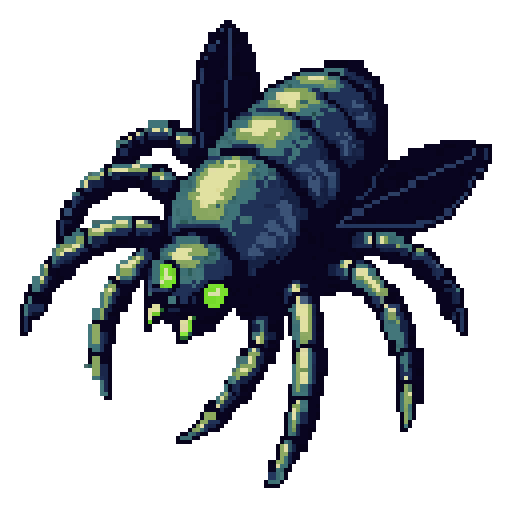
It opens like a wound and the void pours out of it in pieces. It does not launch drones or send a squadron. It tears fragments off itself, and every fragment is hungry, every one a smaller copy of the hunger that made it. They have no attack pattern. They only have a direction, and that direction is you.
The first wave of spawn comes out within ten seconds and there are twenty of them. If you spend that time shooting the core you lose the fight, because the core is sealed while the spawn lives, and the spawn spends that time filling your screen.
You have to thin them. Not clear them, which cannot be done, but thin them enough to force the core open. And that is the moment the fight stops being about accuracy and becomes about how much chaos you can hold before you start firing at nothing in particular.
The Second Squadron could not hold it.
FINAL TRANSMISSION — SECOND SQUADRON, CYCLE 44
„...there are more of them. Every time we clear, there are more. We cannot keep count."
„I can see the parent. I can see it clearly, it is right there, it is open. I cannot reach it."
„We drowned in its children before we ever saw it. Tell them not to go for the core. Tell them to..."
That transmission breaks off mid-sentence and there is no silence after it. There are thirteen seconds of sound that the fleet's technicians never classified. The report says „interference". I listened to that recording on headphones, alone, in the hangar, at three in the morning. It was not interference.
I killed the Spawner and came back, and that was the end of the first twenty waves. The fleet called it a success. The sector was retaken, a corridor cleared, a foothold established. The dispatch used the word „breakthrough".
I sat in the cockpit for another ten minutes after landing, because I did not want to walk out among people who were celebrating.
Four things had stood in my way across those twenty waves. A Sentinel that watched. Twins that had practised for forty years. A Shield built to kill human conviction. A Spawner that spent itself wholesale to find out how much I could take.
None of them was a weapon.
All four were questions. And I answered every one.
Elena painted the hundred and twentieth stripe and asked whether that was the end of it. I said yes. It was the first time I had lied straight to her face, and I did it because I knew what I had felt crossing that last wave: not a winner's relief, but that specific, cold sense of having stepped through a threshold somebody had left open on purpose, for me.
Beyond the gate it was quieter. And that quiet was hungry.
II
The Hunger
WAVES 21 — 40
CHAPTER 6
The Man Who Watched the Wall
Weeks passed after I came back from the first twenty waves. They said we had beaten it. That the fleet had pushed it back into the dark and that I could sleep easy. I sleep. But what I see behind closed eyelids is not a dream. It is eyes that do not close, and a waiting that has no end.
Through those weeks the silence in the sector was total. No signatures, no interference, nothing. The analysts called it a withdrawal. I called it digestion, but not out loud.
I went to the isolation ward at the far end of the base. They keep what is left of the Second Squadron there. The ones who reached it before me and came back, but not all the way back. I had no clearance. I had a hundred and twenty stripes and the face of a man nobody wanted to stop.
There are seven of them. Six lie down. The seventh sits.
I sat across from him. A pilot, a good ten years younger than me, watching the wall as though there were a window there that I could not see. The wall is smooth, matte, painted the colour you choose when you want to provoke nobody. He watched it with the attention you give to something that moves.
I asked what he had seen beyond the Spawner. He did not answer.
I sat there for forty minutes and was already standing up when he spoke. He did not turn his head. He said, using my name, things he had no right to know.
He said how many stripes were on my hull. Not approximately. Exactly.
He said Elena would stop painting them before the snow fell. It never snows on the station. The station has no weather. That sentence meant nothing, and that is why I remember it word for word.
And then he smiled at the wall and spoke one sentence in a language no human throat should be able to carry. It did not sound like speech. It sounded like a noise I felt in my teeth and in the bones of my face, and for a second I was certain I was going to be sick.
And then, as though out of pity, he translated it himself.
ISOLATION WARD — PERSONAL RECORD, UNFILED
„It does not want to kill us. It wants us to go home and tell them how beautiful it was in the dark."
I walked out of there and could not look Elena in the eye for a long time.
Do you understand what is in that sentence? Not a threat. A distribution strategy. Something that does not need to kill us because it needs us to talk about it. Every survivor is a carrier. Every report is an invitation. Every pilot in the mess who hears about twenty waves and thinks he would like a try is another meal walking in on its own legs.
It came back eight days later. Of course it came back.
Only now it was larger. Not by a few percent, not within measurement error. Larger enough that the first mass reading was dismissed as a sensor fault, and the second was confirmed and classified.
All those rounds we had put into it had not killed it. They had fed it.
I flew the firing line again and for the first time understood that it does not kill us out of hatred. Hatred is human. It devours because waking taught it something it had not known in all eternity: absence.
It is hungry. And we are the first meal it has ever been served.
CHAPTER 7 · WAVE 25
I Taught It How I Move
The Berserker is the only enemy in this sector whose description cannot be written honestly without talking about yourself first.
It starts almost gently. Almost slowly. It comes into the arena heavy, armoured, and fires with a spacing that after twenty waves of Twins and Spawner reads as an insult. The armour is untouchable while it does, so the opening minutes are nothing but waiting for it to deign to open.
But it does not open with time. It opens with pain.
Every wound you give it makes it faster. Not by a percentage. In steps. You land one hit and something in its rhythm resets, you land another and it resets again, and at some point you realise the enemy you had filed as slow is a smeared blur of orange fury with no readable rhythm at all.
All of that is in every manual. This is not:
It does not accelerate at random. It accelerates towards you. Every wound teaches it to hate you more precisely. Not to react faster. More precisely. It begins leading its fire to where you habitually run, rather than to where you are.
The pilots who killed it cleanly did so by refusing to flinch. One line, one rhythm, one tempo, no matter how loudly instinct screamed. The ones who hesitated, who jerked sideways once in a panic, taught it how they move.
I hesitated. Three times. On wave twenty-five I lost the shield, then the hull integrity, then three minutes in which all I did was evade, because shooting meant another acceleration.
And that is the paradox of this fight that still will not leave me alone: the only way to kill it is to feed it the thing that makes it deadlier. There is no path around. You cannot win carefully. You have to enrage it all the way and win a race that winds itself up as it runs.
PERSONAL NOTE — AFTER RETURN
„Writing this down because tomorrow I will tell myself it went differently. For three minutes I did not fire. I was afraid every point of damage was a second of my life gone."
„I was right. That was true. And it is exactly why I nearly died, because the truth told me to stand still."
On the way back to base I thought about the man in the isolation ward. About it wanting us to come home and tell them.
The Berserker is that idea in miniature. It does not punish you for being bad. It punishes you for being good. The harder you hit, the more dangerous it becomes, until your own effectiveness is the only thing that can kill you.
The void did not have to invent a new weapon for us. It only had to build an enemy out of our best quality.
CHAPTER 8 · WAVE 30
By Morning the Ship Was Full of Holes
You cannot kill what you cannot see. The Phantom knows this, and that is its entire substance. The rest is consequences.
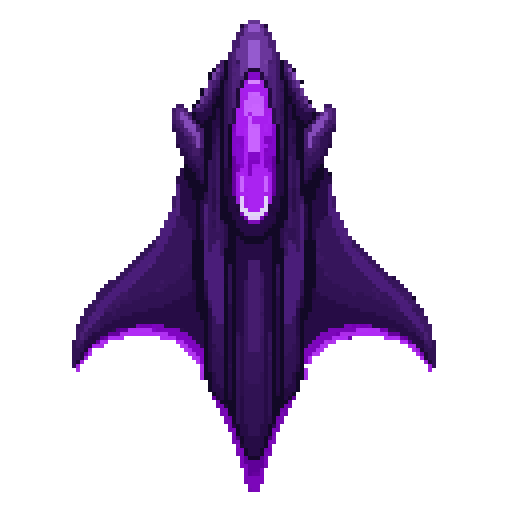
It fades. Not disappears, because disappearing has a beginning and an end and can be noticed. It fades, down to a whisper of itself, a smear of pale rose at the edge of perception, in the place where the eye stops trusting itself and starts filling in. For most of the fight it is visible at a few percent and your brain files those few percent as noise.
And it fires from a place your eyes refuse to hold.
The first hour with the Phantom is learning to distrust your own sight. The second is learning something harder: to stop looking for it.
Because the Phantom can be tracked, only not with the eyes. It still fires, and every shot has a muzzle flash. That flash lasts a fraction of a second and is the only thing that does not lie. It does not tell you where it is. It tells you where it was. But the Phantom moves in a pattern, and a pattern, once you have stacked three or four flashes, stops being a mystery.
You have to shoot where it will be. Not where you see it, because where you see it there is nothing, and where you do not see it, there it is.
That sounds like a riddle until you read the report on the operation the fleet mounted with three marksmen and orders to shoot down one target.
REPORT — PRECISION FIRE TEAM, NIGHT 3
„Over eight hours, not one confirmed hit was recorded. All three gunners consistently reported no visual contact for the entire duration of the operation."
„A hull inspection was carried out at dawn. One hundred and forty-two penetrations were counted. The distribution indicates fire delivered at close range from no fewer than six separate positions."
„The object was never observed. The team reports that they shot at nothing. The team reports that nothing shot at them."
A hundred and forty-two holes and three men convinced the night had passed quietly.
I killed the Phantom by reading its flashes, and it was the first time I won a fight on logic alone, without a single shot fired on feel. I should have felt proud.
I felt something else. Because if a thing can be present and unseen for eight hours, then the question is not how to kill it.
The question is how many times it has been beside me when I was not fighting.
CHAPTER 9 · WAVE 35
It Granted the Wish
The Leviathan does not move. The Leviathan flows. That distinction reads like decoration until you watch it fill the arena with itself and understand that for the next several minutes you will not be fighting an enemy, you will be fighting geometry.
Crimson plates, one after another, a body so long that its beginning and its end never fit in your field of view at the same time. It enters from an edge and for the first seconds you read it as a string of separate enemies, because that is what it looks like. You fire into the middle of a segment and nothing. You fire into another and nothing again.
Only the head takes damage. The rest is a wall the head drags behind it.
The whole fight is one question repeated every dozen seconds: where is the head. And the answer is hard not because it hides, but because finding it means you have to stop watching the thing trying to kill you and start tracking the shape surrounding you.
The worst mistake is letting yourself be pinned inside a coil. The Leviathan does not encircle you deliberately, it simply occupies space, and its body has no reason to go around you. You enter a coil and for three seconds you are inside a tunnel of crimson plating, and those three seconds are exactly enough.
An old fleet myth says it was once a chain of ships welded nose to tail.
I checked. I expected a legend. I found registration numbers.
ARCHIVE — UNITS DECLARED LOST, CONVOY 9
„Twelve transport units, lost in a single event, with no distress signal and no wreckage. The case was closed after seven years of search."
„Metallurgical signature analysis of object LEVIATHAN shows a match with the alloy used in the convoy 9 transport series. The match holds across twelve discrete segments."
„The analyst's conclusion was rejected as unverifiable. The file was moved to passive archive."
Twelve transports. Twelve segments.
There is a sentence in the myth I did not understand for years: that they were welded by something that wanted them to be one, and that it granted the wish.
I understand it now, and I would rather not.
Convoy 9 died trying to run together. They held formation to the end, nose to tail, because that is how a convoy runs. It was their last will and the only thing they had left.
The void heard it. And gave them exactly what they asked for.
CHAPTER 10 · WAVE 40
Every Shot Is a Word
The Splitter cannot be hurt. It can only be divided, and that is not the same thing, and the rest of this chapter is about the difference.
You hit it and it does not get smaller. It comes apart into two smaller copies, faster than the original and angrier. You hit one of those and it does the same. After two minutes the screen is a salmon-coloured porridge in which every element is faster than the last, and you are looking at it knowing, with mathematical certainty, that you did this.
It is the most humiliating fight in the sector. Not because it is hard. Because every single correctly placed shot makes your situation worse, and on the first attempt you genuinely start wondering whether you should simply have flown away.
There is a trick. The fleet never found it.
There is a size below which it cannot divide. A fragment too small has nothing to make two out of. If, instead of spraying fire across the screen, you hold one line and push each successive fragment below that threshold, the chain breaks. Not triumphantly. It just stops.
It took me four attempts to arrive at that, and two days to work out why it frightens me more than the fight itself.
Because it means the Splitter has a limit. That somebody, something, somewhere decided how small the smallest may be. And things that grow without rules do not have limits. Limits belong to things that were designed.
A derelict drifted at the edge of the sector. A black box was recovered from its hold. What it played back still follows the crew who opened it. I am attaching the transcript, though I would rather not:
BLACK BOX — THIRD SQUADRON
„...third squadron, reporting contact, repeat, we have contact. Stand by. Something is wrong with the mass readings. It is growing. It is growing when we shoot. Cease fire! CEASE FIRE, YOU ARE FEEDING IT..."
(crack, twenty-two seconds of silence)
„...it knows us now. I can feel it. It knows how many of us there were, it knows what we are afraid of. Tell the fleet. Tell them every shot is a word, and we have just taught it to speak..."
Every shot is a word.
I sat with that sentence for an entire evening trying to find the metaphor in it, because a metaphor would have been bearable. There is no metaphor in it. It is a description of a mechanism.
The Scouts reported what killed them. The Twins practised for forty years. The Shield was built around a human cognitive failure. The Berserker learns from every wound dealt. The Phantom was present for eight hours nobody noticed. The Splitter has an engineered limit.
That is not a list of enemies. That is a research programme.
I go back out tomorrow. And the day after. And for as long as the fleet keeps ordering it. Because here is the truth I will not tell any of the young pilots in the mess: we are not killing it. We are feeding it, in the hope that a full thing sleeps.
But it does not sleep. It only grows, and waits for the next meal.
And every time I squeeze the trigger, I feel that I am teaching it what we are.
III
The Name
WAVES 41 — 60
CHAPTER 11
She Stands a Moment with the Brush
I have stopped counting how many times I have flown out there. Numbers have lost their meaning, the way sleep has, and silence. All I know is that each time it is closer, not in space but in me. As though it left something behind after every fight. A trace. An echo. Something that now lives underneath my thoughts and waits for me to fall asleep so it can whisper.
Elena hears me talk in my sleep. She will not say what I say, but I can see in her that they are not words in our language.
I asked her once, directly. She said I snore. Elena does not lie well and never had to learn.
Something else has changed, and it is worse than the sleeping. She used to paint the stripe before I was off the ladder. Now she stands a moment with the brush in her hand. Not long, a few seconds, the length of a look at someone's face to check that it matches. As though wondering whether the man who came back is still the man who left.
The pilot in the isolation ward was right. The snow has not fallen yet.
But she already hesitates.
That same week I learned that it has a name. Not a chart designation, not a fleet registry code. A true name, older than our civilisation, older than the stars that light our lanes. It was left by those who died first, whispered on freezing bridges with the last breath they had.
I found it in files that should not exist. Someone tried to erase them, but a fragment survived, burned into the memory of a station whose crew has been dead a long time:
DELETED FILES — SURVIVING FRAGMENT
„Do not speak it aloud. We recorded it here only to warn, not to summon. This name is not a word. It is a key. Anyone who says it opens a door inside himself that cannot be closed again."
„Three of us spoke it, to test. Three of us now watch the wall and smile at something the rest of us cannot see."
„It hears its name across any distance. When you say it, you are speaking directly to it. And it always answers."
Three who watch the wall.
I read that sentence and did not breathe for a good half a minute, because in the isolation ward at the end of our base there sits a man who watches the wall and smiles at something I cannot see. And all this time I had assumed the Spawner had done that to him.
It was not the Spawner. He spoke it.
I will not write the name here. Forgive me if you are reading this and feel cheated, but this one thing I will spare you. Some doors are better left shut.
I will only tell you that when I learned it, I suddenly understood why our oldest ancestors, the ones from before engines and charts, preferred not to look at the stars. They knew the dark between them was not empty. That something waits there. That it has a name. And that the name is waiting for someone stupid enough, or lonely enough, to finally say it.
Sometimes, flying out alone towards that black stain, I catch my own lips moving. And I have to set my teeth to stop myself from finding out how it sounds.
CHAPTER 12 · WAVE 45
Permission Not Granted
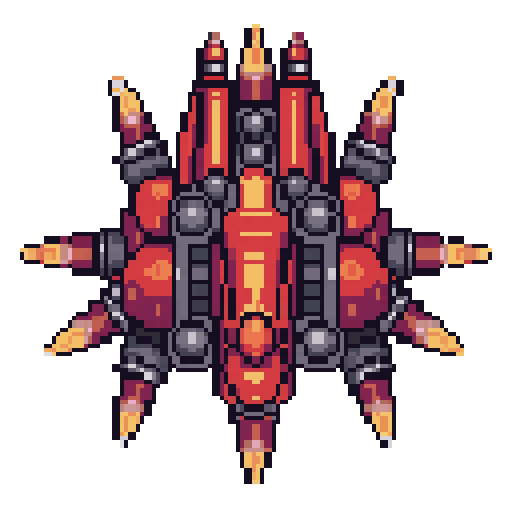
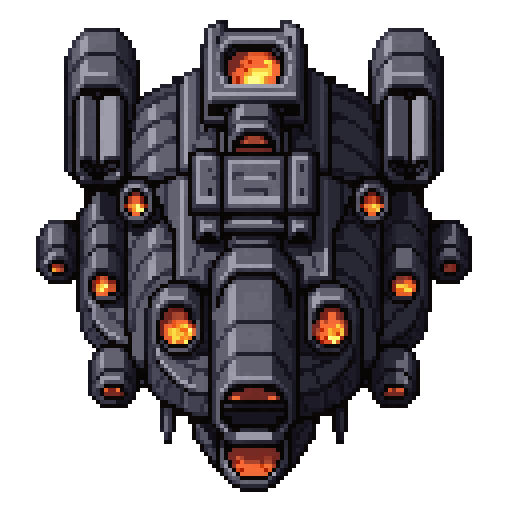
The Fortress does not chase. It does not need to. It sits at the top of the arena like a verdict and sows yellow gunfire through every lane you might have lived in. Patience is its only language.
For the first twenty minutes I was certain it was simply a larger Shield. The same layout, the same bastion with generators in orbit, the same rule: while one lives, the core is out of reach. I had learned that lesson on wave fifteen and was pleased with myself for recognising it immediately.
But the Fortress is not a larger Shield. The Fortress is a Shield that knows you have already met one.
Because the generators are there, and they do have to come down, except that the Fortress does something the Shield never did: it obstructs your access to your own knowledge. Its barrage is arranged so that every approach line to a generator crosses a lane you cannot survive for more than a second. It is not defending the core. It is defending the solution.
You know what to do for the entire fight. You cannot do it, and that is the whole problem.
And when the last generator dies, something happens that did not happen with the Shield. A red eye opens on the exposed core. Not for one second, as with the Sentinel. Cyclically. It opens and closes, and while it is open the Fortress fires exactly where it is looking.
An eye for an eye. Someone called it that in the first report and the name stuck, though I suspect he named it without the irony it deserves.
After that fight I went back to the archive and pulled up „Stone Wall", the hour and eight minutes the fleet lost to the Shield thirty waves earlier. I read it a second time, and this time I stopped where I should not have.
TRANSCRIPT — OPERATION „STONE WALL", MIN. 61:14
„Command, those are not escort drones. They are doing something. They are sustaining something. Requesting permission to switch targets."
„...permission not granted."
The pilot knew. He worked it out in the sixty-first minute, alone, under fire, and he reported it.
Somebody at command said no.
For thirty waves I had been telling myself the Shield killed human cognitive failure. That is not true. The human cognitive failure was identified and reported in time. What killed them was the chain of command.
And that is the thought I am sitting with now, longer than I should. Because if the void designs enemies around our weaknesses, then it did not stop at perception. It went higher. To the structure that makes a man wait for permission when he already has the answer.
I do not know how you learn something like that from shot-down Scouts.
I suspect you do not.
CHAPTER 13 · WAVE 50
Half a Second Behind
Halfway. Wave fifty. The void stopped sending things and sent me.
The Mirror watches how you move and answers in molten copper reflections of your own patterns. It does not copy live, because that would be harmless. It stays half a second behind, and for that half second you think you are winning.
The opening minutes are almost comic. You dodge, it dodges a moment later, and so it is always where you just were. It is easy to file that as a design flaw.
Then you notice it is getting better at it. That the half second is shortening to three tenths. That your favourite break to the upper right, the one you have used by reflex for a hundred and forty flights and could not describe if asked, is suddenly met by fire led into a place you have not reached yet.
It is not learning your movements. It is learning your habits. And a habit is a movement you do not choose consciously, so you cannot consciously change it.
The only thing that works is breaking your own rhythm. Doing uncomfortable things. Breaking the wrong way, turning back for no reason, giving up position on purpose. Fighting the Mirror like a stranger fighting you, not like you fighting yourself.
That is sustainable for about forty seconds. Then instinct returns, because instinct always returns, and the real fight begins: not with the reflection, but with yourself.
I killed it and landed, and for three days afterwards I did something I cannot name any better than checking on myself. I would catch a movement and ask whether I had made it because I wanted to, or because I always do. The pilots who beat it stop trusting their instincts, because instincts are precisely what it memorised.
ARCHIVE — FLEET PSYCHOLOGIST'S NOTE
„Among pilots with recorded contact with object MIRROR we observe a recurring syndrome: over-control of one's own movement, secondary hesitation on routine tasks, degraded performance in simple manoeuvres alongside improvement in complex ones."
„Patients describe it as 'watching my own hands'. Symptoms resolve within three to five weeks."
„In pilots with repeated exposure they do not resolve."
Wave fifty. Ten bosses behind me, ten ahead, and the first of them that needed no shape of its own, because mine sufficed.
I wrote earlier that the Berserker was an enemy built out of our best quality.
I had the order wrong. The Berserker was the sketch. The Mirror is the finished version.
CHAPTER 14 · WAVE 55
He Stopped Writing Mid-Sentence
The Parasite feeds before it fights, and that is the one line in the fleet bestiary written precisely and without ornament.
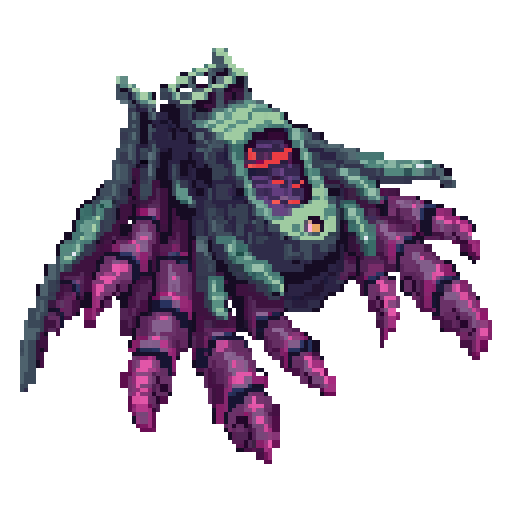
It wears a scale of bio-armour and it has tentacles around it. Not limbs, not weapons. Tentacles that drift separately, each on its own rhythm, and while even one of them lives, everything you throw at it arrives reduced to a quarter.
Not to zero. That matters, and it is the difference between it and the Shield.
Because a quarter is enough for you to see progress. The bar moves. Slowly, but it moves. And on the first attempt you genuinely believe this can be pushed through on stubbornness alone, that it is enough not to stop firing.
It can be. Theoretically. You only have to survive four times longer than you should, in a space the tentacles are systematically taking away from you.
This is a trap built not on ignorance but on hope. The Shield told you outright: you are doing nothing, change target. The Parasite whispers: you are nearly there, a little more.
I cleared the tentacles on the third attempt and only then saw what lies under the scale. Something softer. Something that had waited motionless through the entire fight.
The fleet bestiary breaks off at this point in a way I only noticed while looking for something else.
ARCHIVE — XENOBIOLOGY DOSSIER, ENTRY 7
„The internal tissue of the object shows no features of a digestive or reproductive system. The structure resembles a sensory organ. Preliminary hypothesis: the object does not feed in a metabolic sense, but collects"
That is where the entry ends. There is no full stop. There is no next page. The file metadata still carries a last-write time, and that time is four hours later than the moment the author stopped writing.
Four hours in which the file was open and nobody added a single character.
I looked into what became of him. His personnel file records a transfer to a medical facility on the home station. There is no record of a discharge.
I do not know what he did not manage to write. I can guess one word, and I would prefer my guesses to be worse than the truth, but with this void they never have been.
Collects. Not food. It gathers something it needs a sensory organ for.
CHAPTER 15 · WAVE 60
He Died Exactly According to Plan
The Clockwork is the only enemy in this sector that can be beaten perfectly, and that is precisely the worst thing about it.
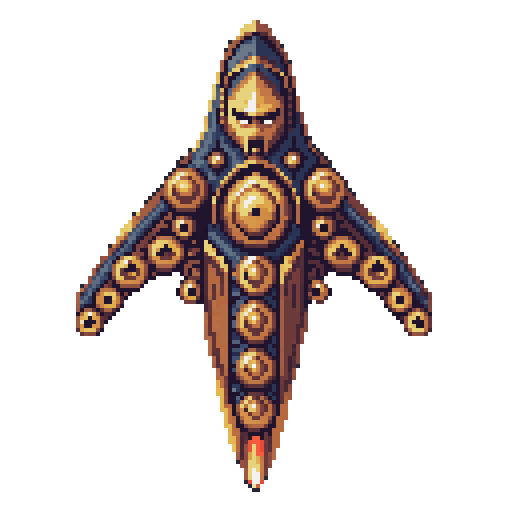
It runs on gears of golden light. Every attack is a tick, every gap a tock. Everything it does is on time, and if you hear the rhythm you can dance through it forever. If you do not, it crushes you in the cracks between seconds.
There is no randomness. Not a trace. After twelve bosses built on chaos, multiplication and unpredictability, the void fields an enemy that is fully deterministic, and it is a bigger surprise than anything before it.
Through the locked-gear phase it is untouchable. In the spiral phase it takes half damage. The open beat between ticks is the only window and it is always exactly where it should be.
I learned it in four attempts and on the fourth I went through without being hit. I should have celebrated. Instead I sat in the cockpit thinking about the engineer.
Because there is an entry in the archive about a man who decoded the Clockwork's beat. He did it first, wrote it up, passed it on. And then he died.
For years I read that note as a grim joke. „He died exactly according to plan." Very funny. He cracked the clock and the clock got him.
I pulled the original.
ARCHIVE — TECHNICAL REPORT, APPENDIX C
„The sequence of object CLOCKWORK is fully deterministic and has been mapped in the attached schematic. Maintaining the stated intervals renders the unit unable to land a hit."
„The author carried out verification in flight. Sequence conformity confirmed at 100 percent across forty-one cycles."
„On the forty-second cycle the author departed from the schematic. The flight recorder gives no reason. The manoeuvre was not forced by incoming fire."
Forty-one cycles flawless. And then, for no reason, under no fire, no pressure, he stepped off the schematic he had written himself.
I know why he did it. I know because on my fourth attempt, somewhere around the third minute of flawless dancing, for a fraction of a second I had exactly the same thought.
When you fight something entirely predictable, you stop fighting. You start executing. And executing for long enough stops being yours. The hands do, you watch. And in that watching there arises the one question that means anything at all: what if I did something else right now?
Not out of panic. Not out of error. Out of a need to confirm that it is still me in here and not just the sequence.
He confirmed.
And that closes waves forty-one through sixty better than I could myself. The Fortress killed men through the chain of command. The Mirror killed their instincts. The Parasite fed on hope. The Clockwork killed a man by giving him perfection and waiting until it grew too tight around him.
Four different shapes. One question, asked again and again: where does the pilot end and the habit, the procedure, the sequence begin. It is not hunting our weaknesses. It is hunting the place where we stop being ourselves.
Elena was not standing with the brush that day. The stripe was already painted when I climbed out.
I did not ask who had painted it.
IV
The Truth
WAVES 61 — 80
CHAPTER 16
Do Not Wake It Twice
I thought the worst was behind me. That I had learned its hunger and its name and that this void had nothing worse left to show me. I was wrong. The worst truth is not about it. It is about us.
It began with something the registry listed as a navigational obstruction. An object drifting at the edge of the sector, marked as debris, routed around by every corridor for a hundred years. Nobody ever checked, because nobody checks debris.
It was not debris. It was a wreck the size of a moon.
Dead since before our calendars begin. I went inside. I should not have, but I did, and for the first half hour I could not understand what I was seeing, because the scale did not fit anything I knew. Corridors as tall as our hangars. Hatches the size of dock gates. All of it dead, cold, without a single spark.
We are not the first.
That is the truth hardest to carry, so I will write it again so it stays: we are not the first. Before us, at a distance in time beside which our history is a blink, there was a civilisation. They reached further than we will ever dare to dream. They had ships beside which our fleet is a child's toy.
And they woke it too. They fought too. They also thought they were killing it as they pushed it back into the dark.
The walls were covered in writing in a hundred languages. Not one, not two. A hundred. As though the whole galaxy had fled here to leave a last word, and as though everyone who reached this place wrote theirs beneath somebody else's that they could not read.
I walked that corridor for three hours. The writing thinned, then stopped altogether, and for the last few hundred metres there were only bare walls. As though those who got that far stopped seeing the point of writing.
And at the very end, in the heart of the wreck, cut into a metal our strongest lasers cannot so much as scratch, one sentence repeated a thousand times:
THE WRECK — INSCRIPTION IN THE HULL'S HEART
DO NOT WAKE IT TWICE.
DO NOT WAKE IT TWICE.
DO NOT WAKE IT TWICE.
Cut so deep it looks as though someone were trying to drive the words into reality itself. As though they knew they would die, and the only thing left to them was to leave a warning for the next fools who would come here.
For us.
That night I understood for the first time why I shield Elena from the truth. I do not tell her what I saw in the wreck. I do not tell her what I hear when I close my eyes. I tell myself I am sparing her, but the truth is otherwise: I have become like the men of the Second Squadron. I carry something that cannot be said in our language, and I keep silent, because silence is all I have left.
I checked the fleet registry. I counted how many times humanity has stood against this thing, how many times we pushed it back, how many times we declared victory and went home to celebrate.
They warned us: do not wake it twice.
We have woken it a thousand times.
And every time it came back larger, hungrier, closer. A civilisation wiser than ours died waking it once.
What does that say about us, who do it without end and call it duty?
CHAPTER 17 · WAVE 65
The Largest Thing They Survived to Name
The Dreadnought is the only enemy in this sector that can be honestly described in three sentences, and that in a way makes it the most frightening of all twenty.
It takes the entire top of the arena. It is a wall of red-orange war and it means every inch of it. After the opening phase, in which it is untouchable, there is no trick left, no hidden stage, no generator to strip and no pattern to crack.
There is only the question of whether you deal more damage than it does, faster than it erases you.
Most cannot.
For forty waves I had been learning that each of these things is a puzzle. The Sentinel was about patience, the Shield about what to shoot, the Mirror about instinct, the Clockwork about rhythm. Every time there was an answer and every time finding it was the fight.
The Dreadnought has no answer. The Dreadnought is an arithmetic.
And that is the shift I stopped on for longer than the fight itself took. Because twenty bosses form a curve, and a curve has a shape. The first ten taught me to think. The eleventh through the thirteenth stopped teaching anything and started measuring what was left.
ARCHIVE — CLASSIFICATION NOTE, OBJECT DREADNOUGHT
„No weakness phase, shielding mechanism or auxiliary structure was recorded. Tactical analysis does not indicate a recommended approach."
„Recommendation: avoid contact. In the event of contact: maximise time on target."
„Proper name assigned by the crew that first observed it and survived the observation. Justification on file: 'we ran out of words big enough, so we used this one'."
We ran out of words big enough.
I killed it and left that wave at nine percent hull, no bombs, no shield, with hands that shook for a quarter of an hour after landing.
And it was not fear. It was the exhaustion of a man who has just understood that he is no longer being examined, but raced.
An examination can be passed with cleverness. A race cannot.
CHAPTER 18 · WAVE 70
Mathematics You Cannot Survive
The Warp refuses to be where you aimed, and it does it so offhandedly that for the first minutes you take it for a fault in your own sensors.
It tears holes in space and passes through them. Hot violet light that it enters on one side of the arena and leaves on the other, and between the two there is no movement that can be traced. It does not travel. It stops being here and starts being there.
The worst part is not that it jumps. The worst part is what it does to the arena.
Because the Warp does not only move itself. It folds the space around it, and the corner where you were safe for half the fight becomes a kill zone between one blink and the next. Not because something flew into it. Because that corner is somewhere else now.
The fleet's navigators ran the numbers and called it mathematics you cannot survive. I pulled their report and there is a sentence in it I cannot get out of my head.
ARCHIVE — NAVIGATION SECTION, ANALYSIS OF OBJECT WARP
„The object performs displacements inconsistent with the conservation of momentum. No acceleration or deceleration phase was recorded. Position readings are discontinuous."
„Modelling such motion in our geometry requires the assumption that the space between the point of departure and the point of arrival ceases, for that interval, to exist."
„The section is unable to propose an evasive manoeuvre, because an evasive manoeuvre assumes that the space we evade into will remain where it is."
The navigation section could not propose an evasion, because evasion assumes the space stays put.
That is a sentence written by people who spent their lives calculating trajectories, and who had to admit in a single paragraph that the instrument which is their entire discipline had stopped working here.
It can be beaten. The jump has a telegraph, a brief flash before it exits, and if you learn to read it you can aim at the arrival point instead of chasing the vanishing point. It took me five attempts and six minutes to stop trusting my eyes and start trusting that flash.
But it is not a victory of the same kind as the earlier ones. Against the Sentinel I beat an enemy. Against the Warp I beat only that particular session with something that does this offhandedly, like breathing, like something that was never bound to the same room as me.
It does not break the rules to kill me. It simply never was bound by them, and I am.
CHAPTER 19 · WAVE 75
The Choice Is Not Impossible. It Is Expensive
The Hive Queen is never alone, and that is exactly the point.
She commands an amber storm of lesser things and does not stop making them for a moment. Each of them is a thought that is presently dreaming of finishing you. They are not dangerous individually. They are dangerous because there are always a few too many of them for the rate at which you can clear.
And here is the choice that defines this fight.
You kill the swarm and she makes more. Always more. You can shoot the brood for twenty minutes and not get a metre closer to her, because the hatch rate exceeds your clear rate.
Or you burn through the brood, taking hits you would not otherwise have to take, and go straight for her. Then the swarm forgets what it was angry about, because there is no longer anyone to remind it.
The Second Squadron called that choice impossible.
It is not impossible. It is only expensive, and those are not the same thing, and the difference between those two words has killed more men in this sector than any single round.
ARCHIVE — SECOND SQUADRON, PRE-LAUNCH BRIEFING RECORD
„There is no way through the brood without losses. We ran it three times."
„Then we do not go through. We clear until it is done and then we go in clean."
„There is no 'until it is done'. She makes them faster than we shoot. Clearing until it is done is clearing until we are out of ammunition."
„Then we clear. I am not giving an order to fly at something knowing I will lose someone."
I am not giving an order knowing I will lose someone.
That is a sentence written by a decent man. A man who cared about his people more than about the outcome of the operation, and who in any other situation would have been a hundred percent right.
They drowned in her children before they ever saw her.
I have been sitting with this for three days and cannot find a moral in it that could be said out loud in front of the young ones in the mess. Because the truth is that I got through that wave by taking three hits the Second Squadron's commander would not accept, and that I am here and they are not.
The void did not build her to kill us. It built her to force a good man into a bad choice, and to watch which side he takes.
CHAPTER 20 · WAVE 80
Whatever It Is, It Owns a Clock
Chrono does not move faster than you. It makes you move slower than it. That sounds like the same thing described twice and it is not, and this whole fight is about why.
It bends gold-lit time around itself. Your dodge stretches into an eternity in which you can see the incoming round, know exactly where it will land, and do nothing about it, because your hands are moving at a different tempo from your head. And its own attacks compress into the gap you have just left.
Reacting does not work. That is the only sentence you need to remember. By the time you react it is already too late, because a reaction by definition comes after the event, and it controls the interval between the two.
You have to anticipate. To move before there is anything to move for.
It looks absurd from outside. A pilot dodging nothing, breaking out of empty space, evading rounds that do not exist yet. But it is the only way, and learning it takes longer than everything I learned from the previous nineteen combined.
There is one entry about Chrono in the archive and it is not a tactical one.
ARCHIVE — SHIPBOARD CHRONOMETER LOG
„00:14:22 — nominal."
„00:14:22 — nominal."
„00:14:22 — nominal."
„00:14:22 — nominal."
(remainder of log empty, device serviceable)
The same second four times. Not a fault, because the chronometer passed a full diagnostic afterwards without a single error. It simply recorded the same second four times, and then stopped recording anything.
I do not know what Chrono is. I do not know whether it is a machine, a creature, or something we have no word for.
I know one thing, and it is the only conclusion that could be drawn: whatever it is, it owns a clock. And things that own clocks have plans, because a clock is only useful when you are waiting for something.
I came back from wave eighty and sat for an hour with the canopy open, looking at the hangar.
Four things stood in my way in this act. A Dreadnought with no puzzle, only arithmetic. A Warp our rules never applied to. A Hive Queen who forces a bad choice on a good man. A Chrono that owns a clock.
And the wreck. A wreck the size of a moon, covered in a hundred languages, with one sentence cut a thousand times into metal we cannot scratch.
Do not wake it twice.
Twenty waves ahead of me. And a growing sense that I am not approaching them, but that they are coming down for me.
V
The Void Stares Back
WAVES 81 — 100
CHAPTER 21
Someone Wiped Off Half the Stripes
This is the last entry I leave knowing it may be the last. I no longer know how much of me is still me and how much is what I brought back from the dark. But one thing I know for certain and must write down before the rest goes: it knows about me.
Not about the fleet. Not about the squadron. About me. About the hand on the stick.
About you, whoever you are, reading this.
I understood it during the last major operation. We flew with the whole fleet, a thousand ships, a wall of fire the galaxy had never seen. I had two cruisers to port, a full squadron to starboard, and above me a formation that blotted out the stars.
And it was watching only me.
I do not say that as an impression. I say it as an operational fact that I then spent three days checking in the telemetry, looking for another explanation and finding none. Among a thousand pilots it picked my small, insignificant ship and did not take its eyes off me for a second, including while three units closer to it were doing more damage.
Because the two of us have known each other a long time. Since the first day, when my light tore it out of sleep.
I woke it. And it has not forgotten.
I came back from that fight and there was no new stripe.
Elena was not at the airlock. I waited forty minutes, in the cockpit, because getting out meant admitting she was not there. I do not know whether she left, or whether she simply can no longer look at what comes back inside my ship.
Someone had wiped off half the stripes.
Not all of them. Half. Done carefully, from one side, so that the port side keeps every one and the starboard has none. As though somebody wanted me to stop counting. As though somebody wanted to tell me there is no longer any sense in counting the returns of a man who has not really come back in a long time.
The pilot in the isolation ward was right about the snow, about her, about all of it.
I should have asked him whether I would start smiling at the wall too.
The last fragment of file I found was not a warning. It was a question. It was written by someone who had evidently arrived where I am arriving now:
FILE FRAGMENT — AUTHOR UNKNOWN
„I ask myself this every night and find no answer. All my life I believed we fight to kill it. But how do you kill something that grows from every wound?"
„I have begun to suspect a truth worse than death. That our rounds were never weapons. That they were knocking. That every time we attack it, it hears the same thing: we are here, we are ready, you may come for us."
„We were not pushing it into the void. We were inviting it out of one."
Twenty waves left. I am flying.
CHAPTER 22 · WAVE 85
Built from Those Who Came This Close
The Mirror knew my habits. Nemesis knows me.
This is not the same trick performed better. It is another category. The Mirror reflected a movement I had made a second ago. Nemesis answers how I survived eighty-four waves: what I fall back on under pressure, what I avoid by reflex, what distance I treat as safe, how much damage I accept before I start running.
There is no safe habit, because the habit is exactly what she is looking for. There is no proven answer, because a proven answer is something I did before and she had time to watch.
The only thing that works is to win before she finishes learning you. That is not a metaphor, it is the only available tactic: a race between your damage bar and her model of you.
She is dark crimson and she is personal.
And she was built from the wreckage of everyone who came this close before.
I checked that line in the archive, because it sounds like legend, and with this void legends have so far turned out to be documentation.
ARCHIVE — MATERIAL SIGNATURE ANALYSIS, OBJECT NEMESIS
„Plating fragments in the object's outer structure were identified as consistent with eleven fleet units lost in sector VOID over the past eighty years."
„All eleven units were lost at an operational depth corresponding to waves above the seventieth. None belonged to earlier classes."
„The object is not composed of destroyed units. It is composed of the units that got furthest."
Eleven ships. Eleven pilots who got further than anyone else.
That is not a trophy. Trophies are displayed. That is material. The void does not kill the best in order to be rid of them. It collects them, because only the best carry information worth anything.
The fleet did not record what she said.
It recorded that she said something, and that the pilot who heard it never spoke again.
I heard something too. I will not write it down. I will only say that it was not the language the man in the isolation ward spoke, and that this time no translation was needed.
And if she is made of those who got furthest, then she already has some of me in her too. She is only waiting for me to arrive.
CHAPTER 23 · WAVE 90
An Argument with the Floor
The Magnet does not aim at you. It pulls you to where it has already aimed, and that is the whole difference.
It drags your ship across the arena on invisible pink lines of force. Not violently. Not in a way you could answer with one hard correction. Slowly, steadily, stripping you off your dodges a few pixels at a time and laying you down precisely on the path of its next shot.
Fighting it is like arguing with the floor. You cannot win against something that makes no moves and simply is.
After Nemesis, after the Dreadnought, after the Warp, the Magnet is almost a relief. And that is the strangest thing about it.
Because in the fleet's classification it sits lower than what precedes it and what follows. Wave eighty-five is a nightmare. Wave ninety-five is a nightmare. Wave ninety is merely high.
I checked whether that was an error in the tables. It is not.
The fleet pilots who survived stopped trying to go where they wanted and started going where it let them. That is the whole technique: do not fight the drift, build momentum against the pull before it commits. Accept that you do not control your own position, and plan from that assumption.
It took me two attempts to understand and half an attempt to kill it.
I left wave ninety in better shape than I left eighty-five, and with that unsettling feeling I know from every long operation that suddenly goes quiet.
PERSONAL NOTE — AFTER WAVE 90
„It was easier. Not slightly. Clearly. And not because I am better, because against Nemesis I was not."
„When something tightens steadily for eighty waves and then eases off on one, that is not mercy and it is not chance. It is a breath before something."
„Anyone designing a curve knows a man will not take a hundred waves without a single inhale. But whoever gives you that breath does it because they need you to get further."
The void did not give me that wave out of kindness.
It gave it to me because it wants me to reach the hundredth. Which means something there needs me whole.
CHAPTER 24 · WAVE 95
The Way Survivors Describe Weather
When the fleet ran out of words big enough for the Dreadnought, it used that one. For the Titan it used none at all. The files hold only a designation and a parameter set.
A super-massive orange ruin taking up so much of the arena that the question of its shape stops meaning anything. An attack pattern with no gaps. I do not mean narrow gaps, or gaps that are hard to find. There are none.
What it has instead is areas that are slightly less lethal.
And the discipline to survive it is the discipline to accept one sentence and not discard it halfway through: there is no safe place, there is only the least bad one.
That sounds like defeatism. It is not. It is a technique, and it requires reprogramming something that has been reflex for ninety-five waves. All that time I had been hunting gaps. Against the Titan, hunting a gap is death, because in the time it takes to find one you are standing still, and standing still is the only thing worse than a bad move.
Survival is positioning, not dodging. Always be moving towards the least bad space and never stop to assess whether it was the best.
The pilots who beat it describe it the way survivors describe weather. They do not say what they did. They say what it was like.
I read three such accounts and all three share a structure: not one of them contains a first-person verb in the active voice. „It was thick." „It came from the left." „It passed and went quiet." Not one „I did", not one „I chose".
ARCHIVE — SURVIVOR ACCOUNTS, OBJECT TITAN
„I cannot tell it as a fight, because it was not a fight. I was inside something and after a while I stopped being inside it."
„You ask what tactic I adopted. I adopted none. There is no tactic for how much of it there is."
„If I must advise the next one: do not stop to think. Thinking takes a second. There is no second in there."
I got through wave ninety-five and remember nothing of it but movement.
I have no memory of a decision. I have a memory of enduring. And only now, writing this, do I understand why all three accounts sound the same, and why mine will be a fourth identical one.
The Titan is not an enemy. The Titan is the last sieve.
Behind it there is only one thing, and it does not want to find out whether I can fly. It wants to find out who arrived.
CHAPTER 25 · WAVE 100
What Lies Behind the Gate
Everything else was a wall.
A warning. Something the void set between itself and me because it could not be bothered to do this personally. Nineteen things, each of them a question, and I answered every one, and for every answer I paid with something I can no longer get back.
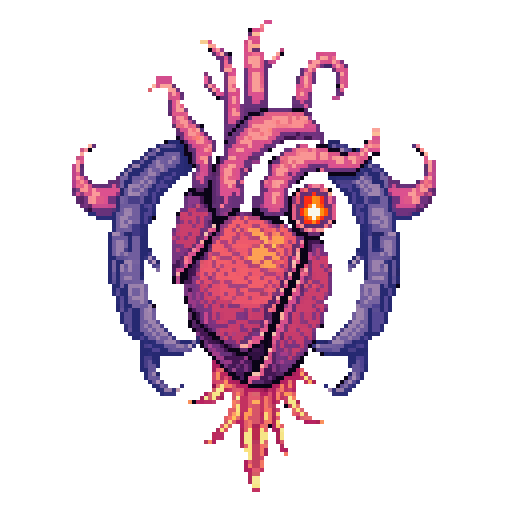
The Voidheart beats with void-rose light and it was awake the entire time.
Not since wave fifty. Not since I crossed the Sentinel. The entire time. Watching through every eye I ever shot out.
Do you see the order now? The Sentinel watched. The Scouts reported. The Mirror learned habits. The Parasite had a sensory organ. Nemesis was built from the eleven best. Every time I thought I was killing something, I was filing a report, and the recipient was one and never changed.
There is no trick for the Voidheart. No generator, no phase, no beat, no telegraph. No trick survives it, because it knows every trick I have ever used, because I showed them to it one after another, across a hundred waves, carefully and in ascending order of difficulty.
What is left is mastery of everything else. Kill all twenty, and you do not stand against it.
You answer it.
The codex ends here, because this is where the pilot stops writing, and I wish I could say it is because he died. It would be simpler.
But I am still writing, so I have to finish honestly.
I understand it now. We do not fight because we can kill it. We fight because killing it is the only conversation we know how to have with it. And it listens. And waits. And grows with every word of ours.
I will fly out there again. I know I will, because I do not know how to do otherwise, because we were shaped to call fear duty and duty courage.
But when the day comes, when I fire the last round like the last word of a prayer, I will ask myself the question we have all been afraid of from the very beginning, from the first light that fell into that dark.
Whether all these years we were pushing it into the void.
Or whether it was patiently, ship by ship, soul by soul, drawing us into its own.
Half the stripes are still on the hull. I have not painted a single one since wave eighty and I do not intend to. Not because I do not come back. I come back every time.
Because I have stopped knowing who it is I would be counting.